A network of digital advocates condemned today the degrading online remarks made by the Facebook content creator behind the page “Ako si Eboy” against female models during what appeared to be a brand media event, saying such behavior normalizes online harassment and objectification of women on social media.
Digital Pinoys national campaigner Ronald Gustilo said content creators must recognize that having a large online following comes with the responsibility to promote respectful discourse instead of turning women into the subject of humiliating and sexualized commentary for engagement.
“No content creator should build an audience by making women the punchline,” Gustilo said. “Women participating in promotional events or carrying out their professional work deserve respect, not degrading remarks about their bodies or clothing. Creating content that invites or encourages sexualized comments at their expense is irresponsible and contributes to a culture that normalizes online harassment against women.”
According to Gustilo, such acts run contrary to the spirit of Republic Act No. 11313, or the Safe Spaces Act, which recognizes gender-based sexual harassment committed through online platforms and seeks to protect individuals from unwanted, degrading, and sexist behavior in digital spaces.
“The Safe Spaces Act was enacted because online harassment causes real harm. Digital platforms should not become venues where women are subjected to sexist and demeaning commentary simply because they are visible in public or online. Freedom of expression is never a license to harass, objectify, or humiliate others,” he added.
Gustilo also raised concerns over whether individuals featured in online content are aware that recorded footage of them may later be uploaded and framed in a manner that exposes them to ridicule or sexualized attention.
“Even when someone appears in a public-facing event, content creators should think carefully about consent and context. People may agree to be present at an event or be recorded as part of its coverage, but that should not automatically mean they expect their footage to be repurposed into content that invites degrading commentary or strips them of their dignity,” Gustilo said.
Gustilo urged content creators, social media platforms, and brands to foster a culture of accountability by discouraging content that objectifies women and rewards misogynistic behavior with engagement.
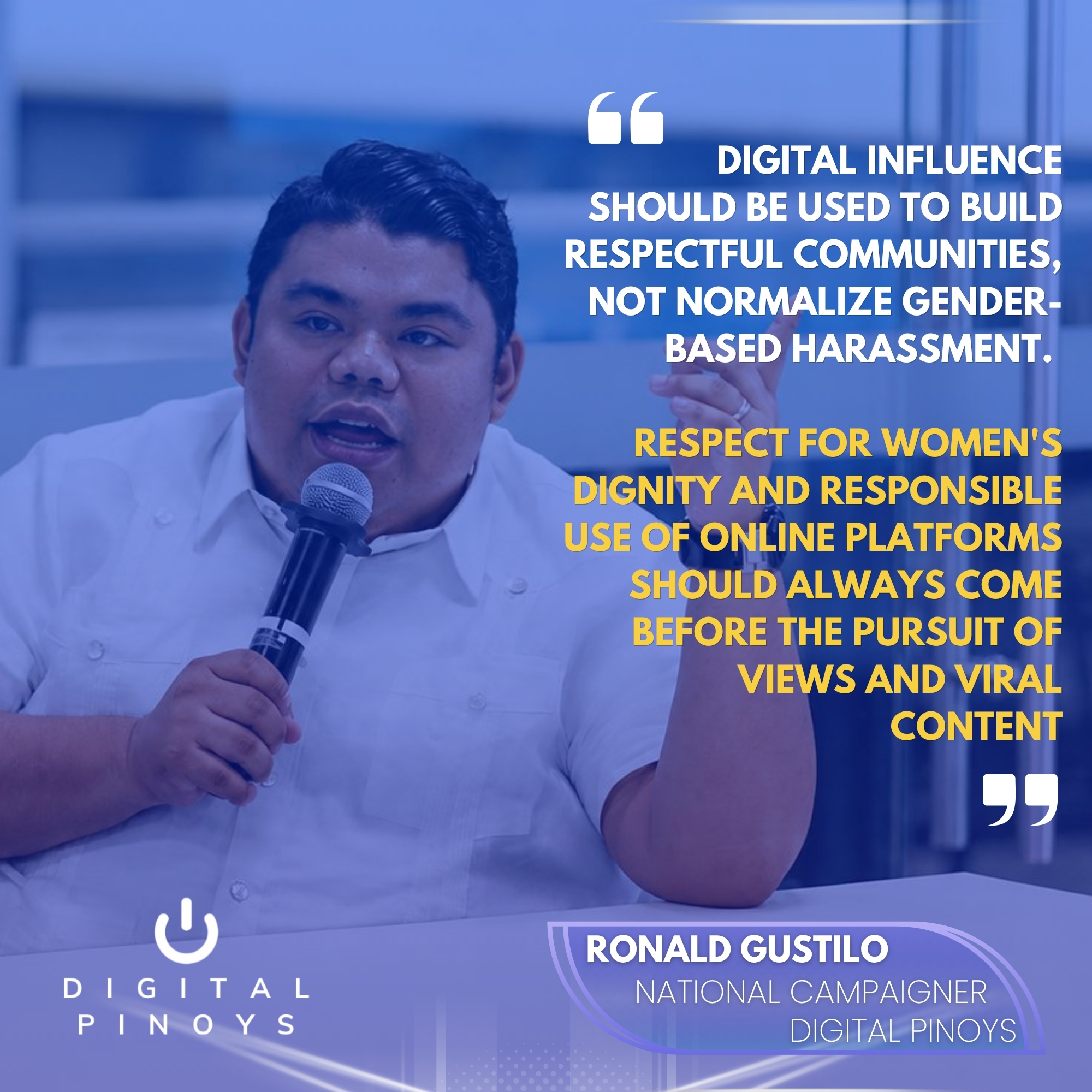
“Digital influence should be used to build respectful communities, not normalize gender-based harassment. Respect for women’s dignity and responsible use of online platforms should always come before the pursuit of views and viral content,” Gustilo concluded. ###