Digital Pinoys strongly condemns the systematic overboarding and attempted concealment of illegally onboarded drivers and riders by certain transport network companies.
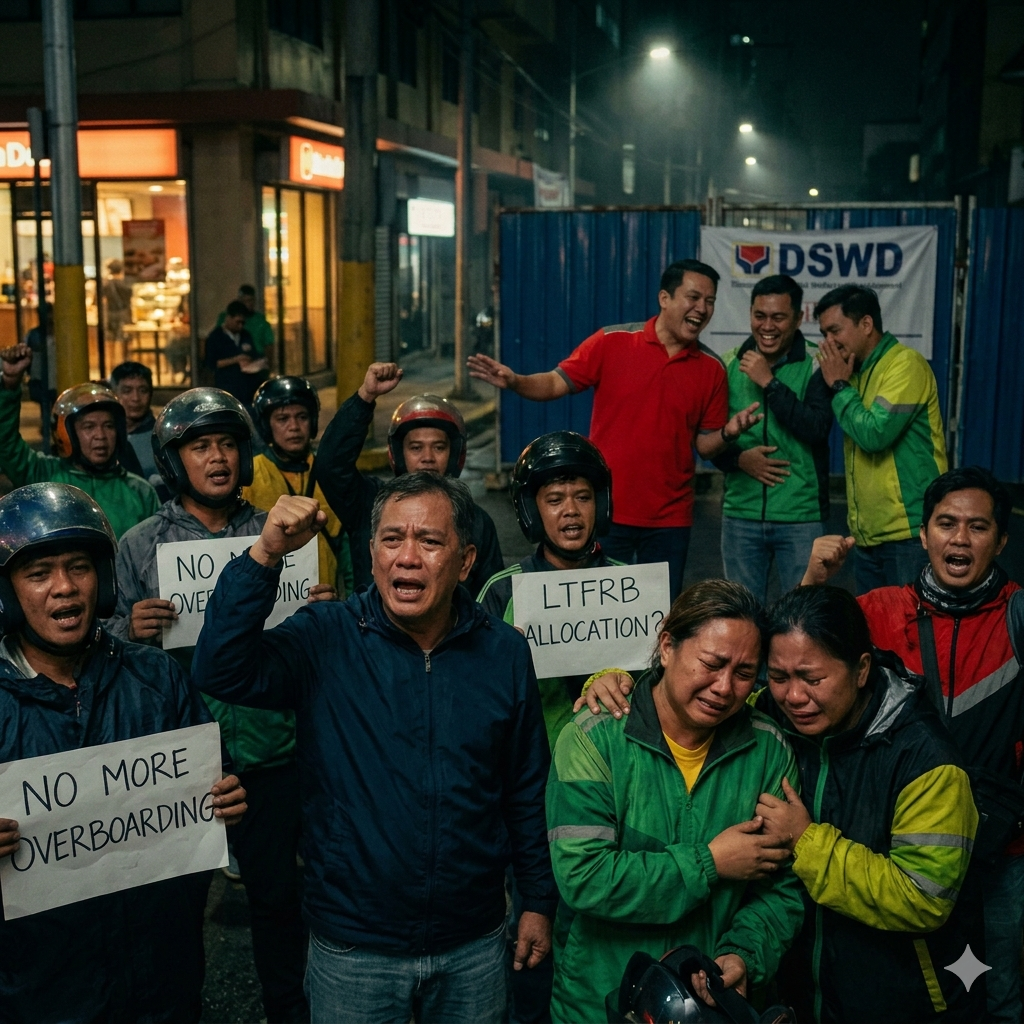
Let us set the record straight: the drivers and riders did not misrepresent themselves. They showed up at subsidy payout sites because they believed they were legitimately part of the system.
What has now emerged is far more disturbing.
These drivers and riders were onboarded under a so-called “tempo” scheme, a mechanism used to circumvent regulatory limits and mask the true scale of operations. When they surfaced during the payout process, the discrepancy between authorized and actual numbers could no longer be hidden.
What followed was the exposure of a scheme far larger than initially understood, even exceeding the scale outlined in the complaint previously filed by Digital Pinoys before the Land Transportation Franchising and Regulatory Board.
Data presented before the LTFRB revealed the magnitude of the problem: transport network companies onboarded far beyond the total slots authorized. Insider information indicates that at least one company onboarded approximately ten times its allocation. This is not a gap. This is a deliberate expansion of a shadow fleet operating outside lawful limits.
The consequences were immediate and damaging.
As raised by Department of Social Welfare and Development Secretary Rex Gatchalian, the subsidy distribution process was overwhelmed by irregularities linked to these platforms. This resulted in confusion, delays, and public frustration—ultimately tarnishing the reputations of the Department of Social Welfare and Development and the Department of Transportation.
In effect, a government program intended to assist vulnerable sectors was disrupted—not by its beneficiaries—but by platform-level manipulation.
Equally alarming are reports that, even during aid distribution, these same companies engaged in aggressive recruitment and poaching of riders from competitors.
This reveals a clear pattern: platforms overboard beyond legal limits, conceal the true scale through internal schemes, exploit regulatory gaps, and ultimately leverage even government aid programs for expansion.
This is not innovation. This is exploitation.
Digital Pinoys calls for immediate and decisive action from the Land Transportation Franchising and Regulatory Board and the Department of Transportation:
A full audit of all drivers and riders onboarded under “temporary” or similar schemes; an immediate freeze on onboarding activities of non-compliant platforms; and the imposition of severe, scale-based penalties, including possible suspension of operations or revocation of accreditation.
Most importantly, accountability must be correctly assigned. The burden should not fall on drivers and riders who acted in good faith. It must fall on the platforms that enabled, encouraged, and attempted to conceal these violations.
This issue has now escalated beyond a regulatory breach.
It is a case of systematic circumvention of public policy—resulting in the disruption of a national aid program and the erosion of public trust.
The Filipino people, the drivers and riders who depend on these platforms, and the commuting public deserve a system built on fairness, legality, and transparency.